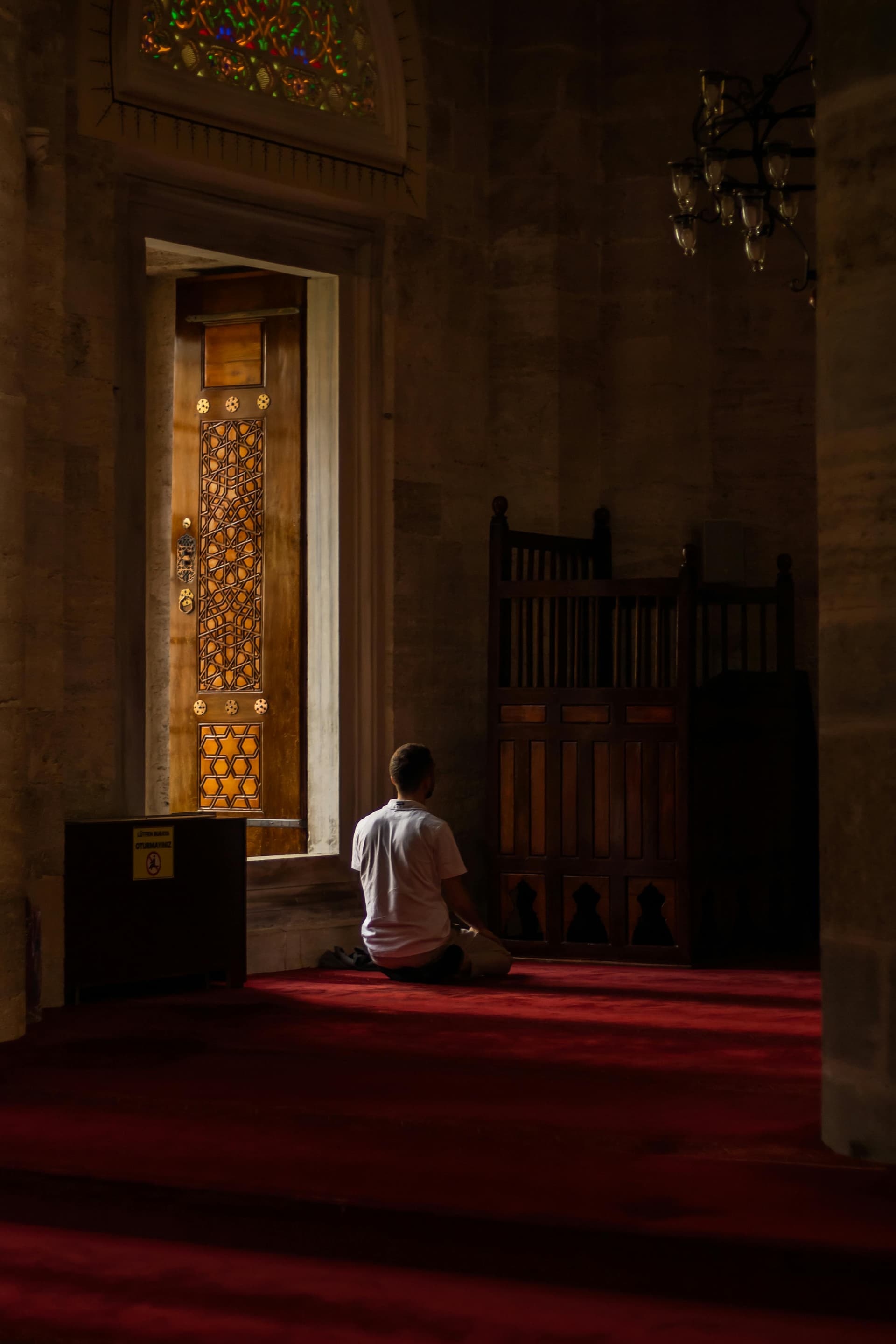
Being gay and Christian is not a contradiction that must be solved. This is a reflection on conditional religion, coming out, and receiving God’s love without abandoning yourself.
What Kind of God Do You Believe In?
This morning I woke up thinking about something an old mentor, someone who felt more like a spiritual mother once told me.
It was during a deeply sensitive season of my life: the first time I came out of the closet. At the time, I was part of a modern Christian denominational church in South Florida. I was maybe two or three years into being actively involved—serving, holding leadership positions, participating in programs.
Somewhere along the way, I met a girl at college. We became friends. And over a few months, I fell in love with her. The problem? I had a boyfriend at the time. The “ideal Christian couple” boyfriend. The one who made sense in that world. Ending things with him was difficult—not because I didn’t know what I wanted, but because I knew what choosing her would mean.
The church I was in was not inclusive. This was going to be controversial, problematic, and costly. Still, I decided to come out.
One of the first people I told was my mentor. We weren’t far apart in age, but she had played a huge role in my life. She was “discipling” me: meeting with me regularly, teaching me “the ways of Jesus” according to her understanding.
I told her I was in love with this girl. That I was going to be with her.
Her response marked me forever:
God would still love me… but I would no longer be blessed.
Because I was “disobedient,” I would no longer be under God’s umbrella of protection.
And because of that disobedience, she no longer wanted to disciple me. “What’s the point of investing in you in other areas,” she said, “if you’re going to be disobedient in this one?”
In that moment, I lost her. I lost the relationship. And I absorbed her words deep into my nervous system, my body, my soul.
Now, 12 years later, part of me wishes I could go back and rescue that 19-year-old girl from believing them. But I have no regrets—because every moment, even the painful ones, led me here.
Still, I’ve asked myself over and over: Why was it so easy for me to accept what she said? Why did it make sense to me at the time that God could love me, yet choose not to bless or protect me?
I think I know the answer now.
A Conditional God Feels Familiar
When I came into Christianity, I went deep. In many ways, it saved my life. I still believe that. But the version of God I was introduced to in that environment was conditional and transactional.
Every Sunday, I’d hear about God’s unconditional love… and then, minutes later, I’d hear about the conditions that must be met to receive it. The “do this or else” clauses. The blessing withheld until obedience was proven.
It was a constant tension inside me.
And then, a few years ago, I had this thought:
It actually takes more faith to believe in an unconditionally loving God than it does to believe in the transactional God I learned about in church.
Why? Because a conditional God is familiar.
The First Blueprint for Love
Most of us grew up with parents who, in their own way, practiced conditional love. They loved us, yes. They wanted the best for us. But when we behaved, we were rewarded; when we disobeyed, we were punished. Love became tied to performance.
Our parents were our first gods before we knew God. They set the blueprint. So of course it was easy to adopt a view of God that looked like theirs—because it matched what we already knew.
I can give my parents grace for that. I can honor that they did their best. But I can also acknowledge: their best was still human. And human love, even at its most beautiful, still falls short of divine love.
The Unconditional God
What I’m learning now is that God—however you understand God—remains connected to humanity and understands the human experience… yet still loves without condition. Still extends grace. Still forgives without hesitation.
A love so vast we can’t truly comprehend it.
A love that doesn’t wait for us to get it right.
A love that asks only that we receive.
But receiving without earning? That’s the part we struggle with. We’ve been conditioned—by childhood, by culture—to believe everything must be attached to performance.
Side note: I’m not saying life is passive or without responsibility. Human life is full of responsibility, sacrifice, and choice. But none of those are prerequisites for God’s love.
A Question for You
So here’s my question for you today:
Does your view of God actually require faith?
Or have you chosen a view that’s easy to believe because it feels familiar?
If your God’s love looks and feels exactly like the conditional love you first learned from your parents or authority figures… maybe that’s not God at all.
I want to believe mine is beyond my comprehension. Beyond my understanding. Beyond what I could imagine I’m worthy of. Beyond what I could dream.
That’s the God I’ll put my faith in.